
Discover Yin Yoga: An Introduction to the practice
- Linda Römer
- Apr 27
- 3 min read

Updated: May 4
Yin Yoga is a slow-paced style of yoga with postures, or asanas, that are held for longer periods of time - typically three to five minutes or more. It emphasizes deep stretching of connective tissues, such as ligaments, joints, and fascia, rather than muscles.
Yin Yoga is not only a physical practice but also a spiritual and philosophical discipline. Its philosophy draws heavily from Taoism, Buddhism, and Traditional Chinese Medicine (TCM), and it emphasizes balance, mindfulness and self-inquiry.
At the heart of Yin Yoga is the Taoist concept of Yin and Yang, the complementary forces that make up all aspects of life.
In short, Yin represents:
o Stillness, introspection, and receptivity
o Softness, openness, and surrender
o Deep connective tissues such as ligaments, joints, and fascia
In short, Yang represents:
o Activity, movement, and strength
o Heat, effort, and muscular engagement

Yin Yoga is a style of yoga that focuses on passive stretches and long-held postures. Unlike more dynamic forms of yoga, Yin encourages practitioners to relax into poses for extended periods, often making use of props such as cushions, blocks and bolsters. This practice targets the body's deeper connective tissues, such as ligaments, joints, and fascia, rather than just the muscles. It is a grounding and still practice, promoting deep internal release and surrender.
Passive stretching - key principle in Yin practice on a physical level
When we first enter a Yin pose, the tissues may resist - this is natural. Over time, as we breathe and soften, the nervous system begins to down-regulate, and the body can safely release into a deeper layer of stretch. It’s important to understand that we are not “pushing” or “forcing” flexibility, we are inviting the body to open through stillness and awareness.
The key principles of passive stretching in Yin Yoga include:
1. Find your edge: Finding a point in the pose where you feel comfortable holding for a longer period of time, only apply 60-70 percent of your maximum effort. This is different from person to person.
2. Stillness: Allowing the body to adapt slowly. Remain like an “unmovable statue”.
3. Time and gravity: Allowing the connective tissues to respond and to go deeper.
4. Exit the pose slowly, respecting the tissues that have been stressed.
Benefits of Practicing Yin Yoga
Practicing Yin Yoga offers numerous benefits, including:
Increased Flexibility: Long-held postures help to stretch and lengthen connective tissues, improving overall flexibility.
Enhanced Circulation: The gentle pressure on the joints and tissues promotes blood flow, aiding in recovery and overall health.
Stress Relief: The meditative nature of Yin Yoga encourages relaxation and stress reduction. Deep tension and stagnant energy can be released through the practice.
Mindfulness and Presence: Yin Yoga invites practitioners to be present in the moment, fostering a deeper connection to the body and breath.
Common Yin Yoga Poses
Familiarizing yourself with common Yin Yoga poses can enhance your practice. Here are a few essential poses to explore:
1. Butterfly Pose (Baddha Konasana)
In this pose, sit with the soles of your feet together and let your knees fall out to the sides. You can lean forward gently to deepen the stretch in your hips.
2. Shoelace Pose
The equivalent of Cow Face Pose in Hatha Yoga, giving a deep stretch to the outer hips and glutes. Each heel is resting close to the opposite sitting bone, keeping the knees stacked. Can be practiced in a combination with a forward fold or twist.
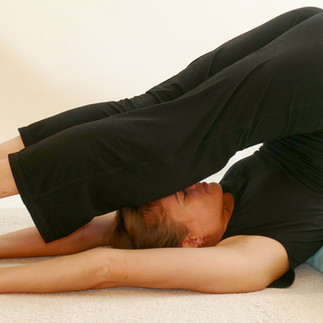
3. Snail Pose
Roll onto the back and extend the legs behind the head. Option the rest the feet on a block behind the head. A deep stretch for the whole backside of the body.
4. Supported Bridge Pose
Lie on your back with your knees bent and feet flat on the floor. Place a block under your sacrum for support. This pose helps to release tension in the lower back.
5. Child’s Pose (Balasana)
Kneel on the floor and sit back on your heels. Reach your arms forward and rest your forehead on the ground. This restorative pose promotes relaxation and grounding.



Comments